

By James Ezema
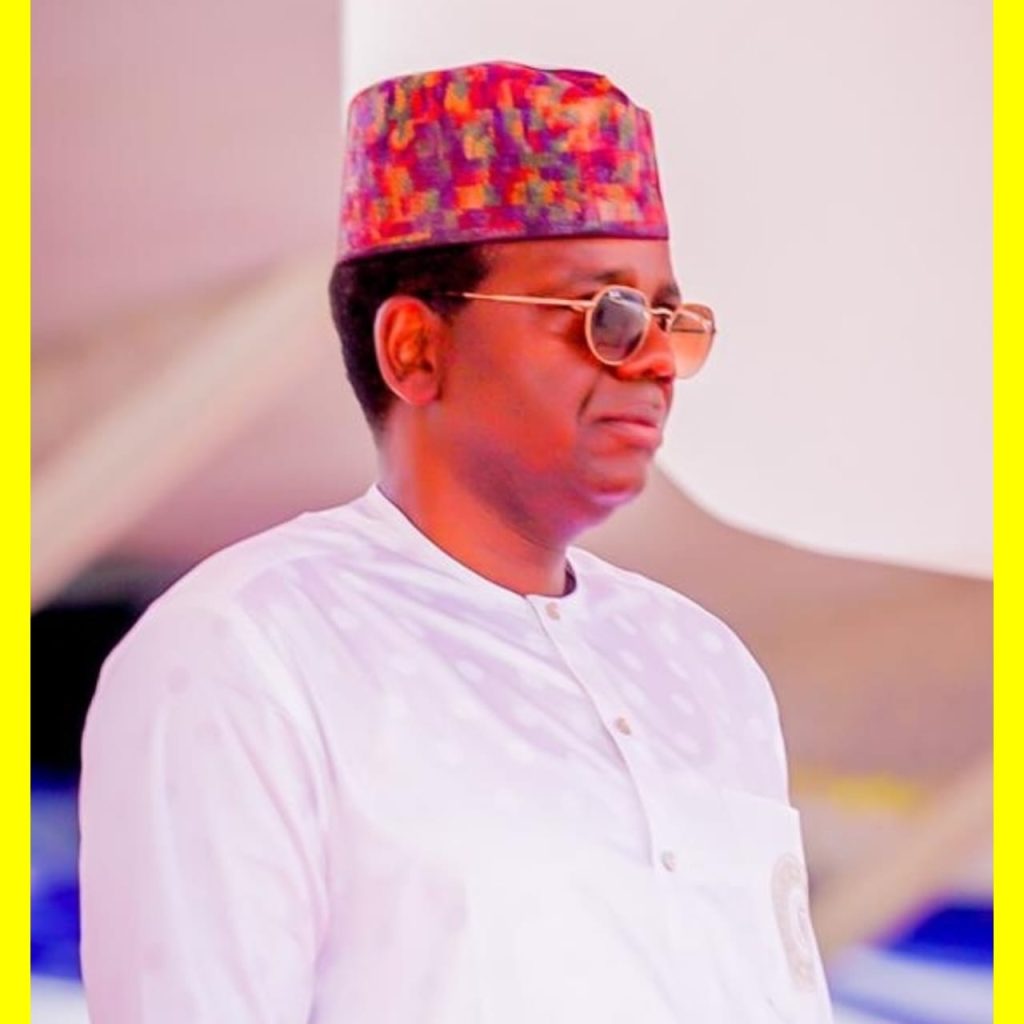
The recent call by a U.S.-based lawmaker, Kimberly Daniels, for the removal of Nigeria’s Minister of State for Defence, Bello Matawalle, has stirred predictable reactions across political and media spaces. Yet, beneath the headlines lies a more important question: is Nigeria’s deepening insecurity the failure of one man—or the consequence of entrenched systemic weaknesses?
Reducing a complex, multi-layered national security crisis to the performance of a single officeholder is not only analytically flawed—it risks distracting from the structural reforms Nigeria urgently needs.
A CRISIS DECADES IN THE MAKING
Nigeria’s insecurity did not begin with Matawalle, nor with the current administration of Bola Ahmed Tinubu. From the Boko Haram insurgency in the North-East to banditry in the North-West and communal conflicts cum farmers/herders clashes in parts of the Middle Belt, the country’s security challenges are rooted in long-standing governance gaps.
These include:
I. Weak policing structures and chronic underfunding of the Nigeria Police Force
II. Poor intelligence coordination across security agencies
III. Proliferation of small arms and porous borders
IV. Socioeconomic drivers such as poverty, unemployment, and rural marginalisation
V. Over-reliance on the military for internal security duties
Any serious diagnosis must begin here—not with a politically convenient scapegoat.
MATAWALLE’S RECORD: A MORE BALANCED VIEW
Since his appointment as Minister of State for Defence in 2023, Matawalle has operated within a highly centralised and historically constrained security architecture. Yet, within these limitations, his contributions have been tangible and deserve objective recognition.
First, he has been instrumental in supporting expanded military operations against bandit enclaves in the North-West, particularly through enhanced coordination between ground forces and air components. These operations have disrupted several criminal networks and led to the neutralisation of key warlords.
Second, Matawalle has consistently advocated for kinetic and non-kinetic approaches, recognising that force alone cannot resolve insurgency. His experience as a former governor of Zamfara State informed initiatives that combined military pressure with local engagement strategies aimed at de-escalating violence.
Third, under his watch, there has been increased emphasis on troop welfare and logistics support, including improved supply lines and operational readiness—critical factors often overlooked in public discourse but essential to battlefield effectiveness.
Fourth, he has played a role in strengthening Nigeria’s defence diplomacy, engaging regional and international partners to support intelligence sharing and counterterrorism cooperation.
None of these efforts suggest perfection. But they do indicate active engagement with the problem—not complicity in it, as some narratives have implied without substantiated proof.
THE DANGER OF SIMPLISTIC NARRATIVES
The recommendation by Kimberly Daniels reflects a broader tendency in international commentary: the urge to personalise systemic failures. While such positions may be well-intentioned, they often lack the contextual depth required to understand Nigeria’s unique security environment.
Security sector reform is not achieved through symbolic dismissals. In fact, abrupt leadership changes without structural adjustments can disrupt continuity, weaken morale, and create further instability within the ranks.
Blaming Matawalle alone risks creating a false sense of action while leaving the real problems untouched.
THE REAL ISSUE: A DISTORTED SECURITY ARCHITECTURE
At the heart of Nigeria’s security crisis lies a fundamental misalignment: the military has been overstretched with internal security responsibilities that should primarily belong to the police.
The Nigeria Police Force, constitutionally mandated to handle internal law enforcement, has been weakened over decades by inadequate funding, poor training, and limited operational capacity.
As a result:
I. Soldiers are deployed for routine policing duties
II. Military resources are stretched thin across multiple internal theatres
III. Response times and intelligence gathering suffer
IV. Civil-military relations become strained
This is neither sustainable nor strategically sound.
A WAY FORWARD: REBALANCING SECURITY RESPONSIBILITIES
Rather than focusing on individual removals, the administration of Bola Ahmed Tinubu should prioritise a phased and deliberate restructuring of Nigeria’s internal security framework.
This must include:
I. Gradual re-equipping and modernisation of the Nigeria Police Force—with emphasis on mobility, communications, forensic capacity, and community policing
II. Comprehensive retraining programmes to enhance professionalism and intelligence-led policing
III. Decentralisation of policing structures, allowing for more responsive state and local security mechanisms
IV. Strategic withdrawal of the military from routine internal operations, reserving its deployment for specialised interventions and external defence roles
V. Strengthening inter-agency coordination, ensuring seamless collaboration between police, intelligence services, and the armed forces
Only through such systemic reforms can Nigeria build a security architecture capable of addressing both current threats and future risks.
CONCLUSION: BEYOND BLAME TO SOLUTIONS
Nigeria stands at a critical juncture. The temptation to assign blame to individuals may offer short-term political satisfaction, but it does little to resolve long-standing structural deficiencies.
Dr Bello Matawalle is not above scrutiny—no public official should be. However, any fair assessment must be grounded in evidence, context, and a clear understanding of institutional constraints.
The path to lasting security lies not in scapegoating, but in bold, systemic reform. It lies in rebuilding institutions, redefining roles, and restoring balance within Nigeria’s security ecosystem.
Above all, it requires leadership that is willing to confront complexity—not reduce it.
Until then, calls for removal—no matter how loudly amplified—risk being nothing more than noise in place of necessary action.
Comrade James Ezema is a journalist, political strategist, and public affairs analyst. He serves as National Vice-President (Investigation) of the Nigerian Guild of Investigative Journalists (NGIJ) and National President of the Association of Bloggers and Journalists Against Fake News (ABJFN). He writes from Abuja, Nigeria.
