

By Kabir Ibrahim
There are moments in the life of every administration, when a political controversy ceases to be merely a dispute between rival politicians and becomes a test of governance itself. Such moments demand clarity, courage, and an unwavering commitment to the public interest.
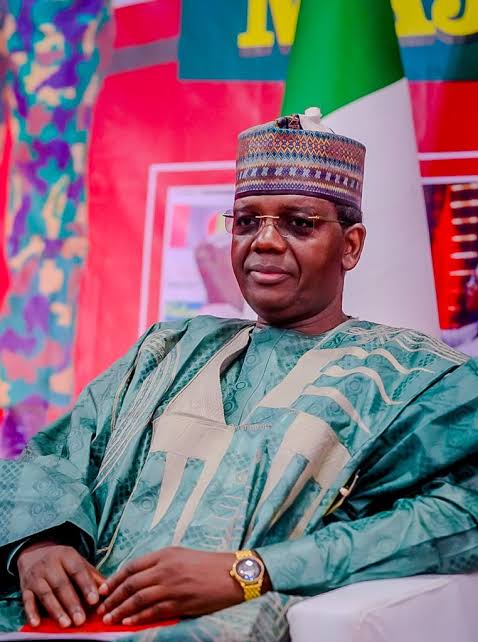
The controversy surrounding Bello Matawalle, Nigeria’s Minister of State for Defence and former governor of Zamfara State, has become one of those moments for the administration of President Bola Ahmed Tinubu.
At the heart of the matter is not merely the personality of Matawalle. Nor is it solely about the bitter political rivalry between him and his successor, Governor Dauda Lawal.
Rather, it is about whether the Nigerian state is willing to subject its most powerful officials to the same scrutiny it demands of everyone else. It is about whether national security appointments can remain insulated from public accountability.
And above all, it is about whether President Tinubu is prepared to confront uncomfortable questions within his own political camp.
The controversy gained renewed national attention when Governor Dauda Lawal publicly alleged that Matawalle was deeply involved in issues relating to banditry during his tenure as governor of Zamfara State.
Lawal, now a member of the ruling party, APC, claimed that information available to his administration suggested that Matawalle maintained relationships with bandit elements and that some of these individuals allegedly had access to Government House during his administration.
He further questioned the propriety of retaining such a figure in a sensitive defence-related office. These allegations have been widely reported and hotly debated across the country.
Matawalle has strongly denied the accusations and described them as politically motivated falsehoods designed to damage his reputation.
The denials are important and must be acknowledged.
In any democratic society, allegations do not amount to proof. Every public official is entitled to the presumption of innocence and the opportunity to defend himself against accusations.
Yet that principle should not be confused with immunity from scrutiny. The issue is not whether Matawalle has been convicted of wrongdoing. He has not. The issue is whether allegations of this magnitude can simply be brushed aside without independent investigation.
This is where the controversy moves beyond Zamfara politics and enters the realm of national governance.
When a sitting governor accuses a serving defence minister of conduct linked to one of the gravest security crises facing the country, the presidency cannot afford to treat the matter as routine political noise.
To do so is to underestimate the significance of the office involved and the seriousness of the allegations being made.
The Defence Ministry occupies a unique position within the Nigerian state. Its leaders oversee institutions responsible for protecting territorial integrity, combating terrorism, supporting internal security operations and coordinating strategic responses to threats facing the country.
Public confidence in those who occupy such positions is therefore essential. That confidence cannot thrive in an atmosphere of unresolved suspicion.
The presidency’s response to the controversy has largely consisted of silence and political defence. Supporters of the government have frequently argued that Dauda Lawal’s accusations are motivated by political hostility.
Some have portrayed the governor’s statements as part of an ongoing effort to discredit his predecessor and settle old scores from Zamfara politics. There is some logic to this argument.
Politics in Nigeria is often ruthless. Allegations are frequently deployed as weapons in battles for power. Successors routinely blame predecessors for inherited problems.
Political rivals exploit scandals to weaken opponents. No serious observer should ignore this reality. Yet the possibility of political motivation does not automatically invalidate an allegation.
History is full of examples where accusations initially dismissed as political attacks later proved to contain elements of truth. Equally, history contains examples where explosive allegations collapsed under the weight of evidence. That is precisely why institutions exist.
The responsibility of government is not to assume guilt. Neither is it to assume innocence. Its responsibility is to establish facts.
The troubling aspect of the Matawalle controversy is not merely that allegations exist. It is that there appears to have been no transparent effort to determine their validity and communicate the findings to the public.
This failure has consequences. It fuels speculation. It encourages conspiracy theories.
It deepens public cynicism. Most importantly, it weakens trust in government institutions.
Trust is already in short supply in Nigeria. Years of corruption scandals, security failures and broken promises have left many citizens deeply sceptical of official assurances. When serious allegations are met with silence, that scepticism only grows stronger.
For President Tinubu, therefore, the challenge is particularly significant because he came to office promising a new style of governance. His administration presented itself as one prepared to confront difficult realities and undertake reforms that previous governments avoided.
Many Nigerians accepted painful economic measures because they believed the President was committed to long-term institutional change. But reform is not measured solely by economic policy.
Reform is also measured by standards. It is measured by the willingness of leaders to apply principles consistently, even when doing so affects allies.
A government that demands accountability from opponents but excuses controversy among friends risks losing moral credibility. This is why the Matawalle issue represents a critical leadership test.
The President must decide whether political considerations will continue to outweigh public concern.
Critics of the government have repeatedly asked a straightforward question: if an opposition figure were facing the same allegations, would the administration be as patient and restrained? The answer is uncomfortable.
Many Nigerians suspect it would not. Whether that perception is fair or unfair is almost beside the point. The perception exists, and it is damaging.
Perception matters because it shapes public confidence. Governments govern most effectively when citizens believe institutions operate according to consistent rules. Once people conclude that different standards apply to different individuals, confidence begins to erode.
The presidency should therefore view the controversy not as an attack on Matawalle but as an opportunity to strengthen institutional credibility.
An independent review of the allegations would serve several purposes. First, it would demonstrate respect for public concern. Second, it would provide Matawalle an opportunity to clear his name through a credible process rather than through political exchanges.
Third, it would reinforce the principle that no public official is above scrutiny. Finally, it would reassure citizens that national security appointments are held to the highest possible standards.
Some supporters of the minister may argue that launching such a review would reward political attacks. This argument misunderstands the nature of accountability. Accountability is not a concession to opponents. It is an obligation owed to the public.
Indeed, if the allegations are unfounded, a transparent investigation would likely strengthen Matawalle’s position rather than weaken it. Unfortunately, the current approach achieves the opposite.
By refusing to address the matter comprehensively, the government allows doubts to persist. By remaining silent, it permits critics to dominate the conversation. By avoiding scrutiny, it creates the impression that scrutiny is something to be feared.
This is neither good politics nor good governance. The stakes are particularly high because Nigeria’s security challenges remain severe. Across large parts of the North-West, communities continue to face threats from bandit groups.
Kidnapping remains a major concern. Rural populations continue to experience fear and uncertainty. In such an environment, confidence in security leadership is essential.
Citizens need to believe that those directing national security efforts possess not only legal authority but also moral authority. That moral authority depends heavily on credibility. And credibility depends heavily on transparency.
President Tinubu has repeatedly emphasised the need for Nigerians to trust his administration’s efforts. Trust, however, cannot be demanded. It must be earned.
One way to earn it is to demonstrate that political influence does not place anyone beyond examination. Another is to show that allegations touching national security are treated with the seriousness they deserve.
The President should therefore resist the temptation to view the Matawalle controversy solely through a partisan lens. This is not merely a dispute between two Zamfara politicians.
It is not merely a clash between a former governor and his successor. It is not merely a political battle within the ruling party’s broader coalition. It is a question about standards. It is a question about accountability.
It is a question about whether the federal government is willing to investigate difficult issues even when they involve powerful insiders. Ultimately, this is the challenge Dauda Lawal has placed before the presidency.
The governor’s allegations may prove true, false, exaggerated or incomplete. That determination belongs to competent institutions, not political commentators. But the existence of the allegations themselves creates an obligation on the part of the federal government.
The obligation is simple. Investigate. Clarify. Communicate. Anything less leaves the country trapped in a cycle of accusation, denial and suspicion. Nigeria deserves better than that.
And if President Tinubu truly intends to build institutions stronger than individuals, then the time has come to confront the Matawalle question directly rather than hope it disappears on its own.
*Ibrahim, a member of the APC, writes from Zamfara
