

From community resilience and the Sahel to Africa’s place at the global security table
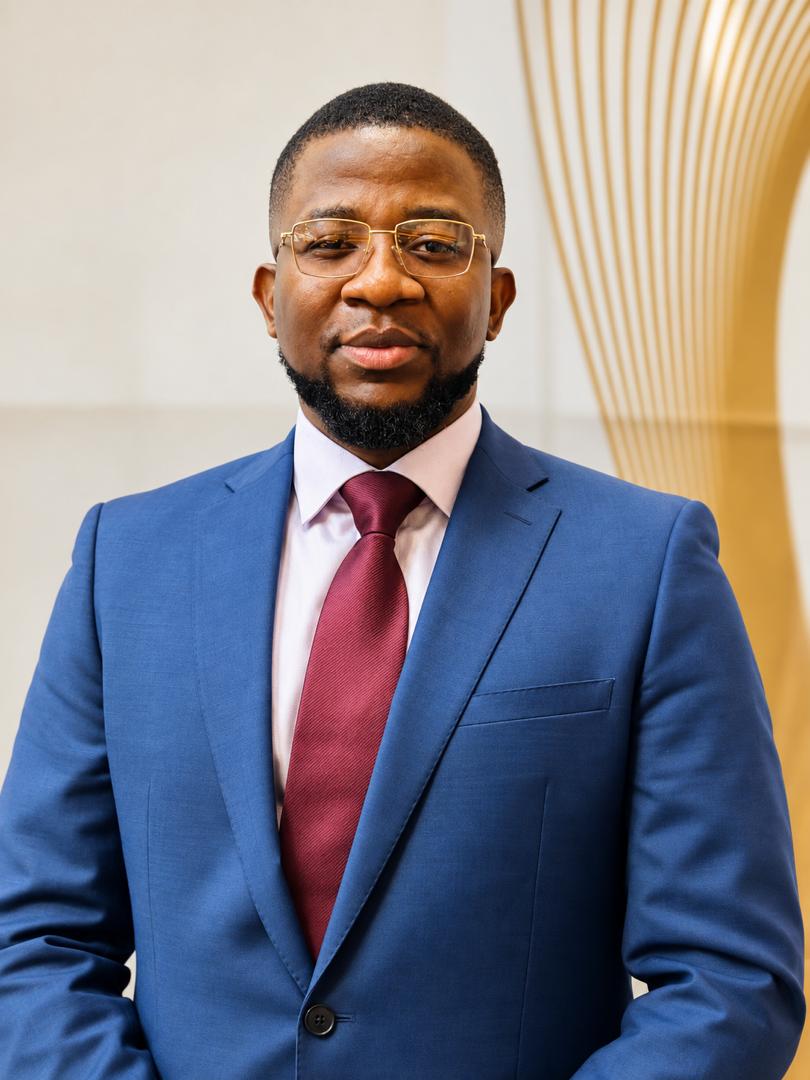
Capt. Oyeleke Folajuwon Oluwole
U.S. Army Veteran | Chief Strategist, Foxtrot Shield Limited
The 81st Session of the United Nations General Assembly convened under the theme “Restoring Trust, Managing Transformation: A United Nations That Delivers for All.” For Nigeria, those words should carry particular significance.
Having participated in engagements on the sidelines of UNGA 81 in New York, including conversations around peace, security, investment, innovation and Nigeria’s development prospects, I returned to one overriding conclusion:
The security challenges confronting Nigeria are increasingly interconnected, while too many of our responses remain compartmentalised.
From communities in Northwest Nigeria to our borders with the wider Sahel, from illicit financial networks to cyberspace, and ultimately to the architecture of the United Nations Security Council itself, contemporary security challenges increasingly transcend administrative and national boundaries.
Our security thinking must do the same..
Security Must Begin Before the Incident
Nigeria has invested heavily in responding to insecurity. The courage and sacrifice of the country’s military, police, intelligence services and other security personnel should never be understated.
But response is only one dimension of security.
A mature security architecture must increasingly ask what happened before an attack, kidnapping, communal conflict or other security emergency occurred.
Were warning indicators visible? Were they detected? Was intelligence collected? Was information shared across the relevant institutions? Were vulnerabilities known but left unresolved? Could intervention have occurred earlier?
The objective must therefore be to move Nigerian security increasingly to the left of the incident- from reaction toward anticipation and prevention.
That requires stronger early-warning capabilities, intelligence sharing, responsible exploitation of open-source intelligence, community-based reporting mechanisms, threat and vulnerability assessments, protection of critical infrastructure and improved institutional interoperability.
The most successful security operation may ultimately be the incident that never occurs because the threat was identified and disrupted beforehand.
Northwest Nigeria Offers an Important Test
One of the most consequential Nigerian security discussions I attended in New York concerned the North-West Nigeria Peace, Security and Development Framework 2026-2030.
The Framework brings Jigawa, Kaduna, Kano, Katsina, Kebbi, Sokoto and Zamfara around a common regional approach to peace, security and development. It connects regional cooperation, security, humanitarian action, development, and peacebuilding, trust and social cohesion rather than addressing these challenges separately.
That matters because insecurity does not recognise state boundaries.
Armed groups can move. Weapons can move. Illicit money can move. Criminal networks can move. Disinformation can move
The decision to think regionally therefore reflects a basic security reality: a networked threat requires a coordinated response.
But there is an equally important second lesson.
Development cannot replace security operations. Neither should discussion of poverty, unemployment, exclusion or weak institutions ever become an excuse for terrorism, kidnapping, banditry or criminality,
Rather, good security strategy distinguishes between the immediate threat and the environment that enables the threat to regenerate.
Security forces may suppress an armed group. Sustainable security also requires institutions, economic opportunity, functioning communities and legitimate governance capable of preventing another threat from occupying the same space.
That is why security and development must reinforce one another.
The Sahel Cannot Be Someone Else’s Security Problem
The same logic extends beyond Nigeria’s borders.
During UNGA 81, Nigeria and Mali held discussions addressing security in the Sahel and West Africa, including terrorism, violent extremism, organised crime, trafficking, arms proliferation and illicit financial flows, alongside regional peace-and-security mechanisms.
This should matter deeply to Nigerians.
Nigeria cannot view developments across the Sahel as distant foreign-policy matters.
A border establishes sovereignty. It does not contain risk.
Weapons trafficking, extremist networks, illicit finance, organised crime and irregular migration operate across jurisdictions. Instability elsewhere in the Sahel can therefore have implications for Nigerian national security.
The diplomatic relationships between Nigeria, its immediate neighbours, ECOWAS countries and the Alliance of Sahel States should consequently retain a substantial security dimension even where political disagreements exist.
Security cooperation does not require governments to agree on everything. It requires recognition that certain threats. endanger everyone.
Intelligence Must Travel as Quickly as the Threat
Nigeria’s national statement at UNGA 81 reinforced this point at the international level.
The address called for stronger international cooperation against terrorism and transnational threats, including exchanging intelligence, disrupting the financing of violence and preventing weapons from crossing borders. It also referenced Nigeria’s contributions to peace operations and regional security efforts.
That principle deserves emphasis.
Terrorism is networked. Organised crime is networked. Cyber threats are networked. Illicit financial flows are networked. Arms trafficking is networked.
Security institutions therefore cannot afford to operate as information islands.
At the domestic level, information must move appropriately between federal, state and local structures. At the regional level, legitimate intelligence cooperation must extend across borders. Internationally, Nigeria must continue developing partnerships capable of identifying and disrupting the financing, movement and enabling infrastructure of transnational threats.
Intelligence that arrives after the attack may explain what happened. Intelligence that arrives before it can change what happens.
Economic Security Is National Security
Another lesson from UNGA 81 is that Nigeria should continue broadening its conception of national security.
Security is certainly about territorial integnty, defence, policing and counterterrorism.
But a modern national-security framework must also consider food security, energy security, digital security, critical infrastructure, supply chains, investment protection and economic resilience.
The Northwest’s investment strategy makes this connection explicit, linking peace and investment with security coordination, conflict prevention and community resilience.
That relationship runs in both directions.
Investors require security. But productive investment can also strengthen security by creating legitimate employment, infrastructure, supply chains, government revenue and economic alternatives to illicit economies.
This does not mean every investment is automatically a security intervention.
It means economic resilience can form part of the environment in which sustainable security becomes possible.
Security Is Also About Trust
UNGA 81’s emphasis on restoring trust is particularly relevant to security.
Communities frequently observe changes in their environments before government institutions do.
Farmers know when routes become unsafe. Traditional leaders recognize emerging community tensions. Transporters observe unusual activity along corridors. Schools notice threats affecting children. Businesses experience extortion and disruption directly.
The challenge is converting local awareness into legitimate, actionable early warning.
Community participation should not mean converting civilians into vigilantes or transferring the responsibilities of the state to citizens.
It should mean creating trusted mechanisms through which communities can communicate relevant information to legitimate authorities and receive appropriate responses.
When citizens believe reporting is pointless or dangerous security institutions lose an important source of situational awareness.
Trust is therefore not simply a social objective. Trust can be a security capability.
Africa’s Place at the Global Security Table
The security conversation at UNGA 81 also raised a much larger question.
Who has a permanent voice when the international community makes its most consequential decisions about peace and security?
Nigeria used its national statement to call, in accordance with the African Union’s Ezulwini Consensus and Sirte Declaration, for at least two permanent Security Council seats for Africa, with the rights and responsibilities of permanent membership – including the veto for as long as that mechanism exists and five non-permanent African seats.
Africa currently has no permanent member of the Security Council. Its five permanent members remain China, France, Russia, the United Kingdom and the United States.
There is an important distinction here.
The continental demand for permanent African representation should not be reduced simply to a contest over which African country receives a seat. The African Union’s common position concerns representation of the continent within the global security architecture.
Nigeria’s own history of participation in international peace operations and regional diplomacy naturally forms part of its case for a significant role in those conversations. But selection of any eventual African permanent representatives remains a separate political and diplomatic question.
What is increasingly difficult to dispute is the representational imbalance itself.
The President of the 81st General Assembly also placed Africa’s underrepresentation within the broader question of the fairness, representativeness and credibility of the institution.
Importantly, the demand is no longer being voiced by African states alone.
When the Caribbean Says Africa Should Have a Seat, the World Should Listen
There was a particularly significant dimension to this debate at UNGA 81: solidarity from the Caribbean.
CARICOM has stated that the exclusion of Africa from permanent membership of the Security Council must be corrected. The Caribbean grouping simultaneously argues for addressing the underrepresentation of Latin America and the Caribbean and for assured representation for Small Island Developing States.
At UNGA 81, Barbados Prime Minister Mia Amor Mottley also highlighted Africa’s absence from permanent membership while raising the lack of assured representation for Small Island Developing States. She coupled institutional reform with a call for greater investment in conflict prevention, mediation and adequately resourced peacekeeping.
That cross-regional support is important.
It changes the character of the argument.
Security Council reform should not be understood simply as Africa demanding something for Africa.
It forms part of a wider international debate over whether institutions designed eight decades ago adequately represent the geopolitical realities and security challenges of the twenty-first century.
For Africa, permanent representation would bring influence. It would also bring responsibility.
A permanent African voice at the Security Council would carry expectations of sustained diplomatic engagement, credible regional leadership, investment in African peace and security institutions and a willingness to participate in difficult. decisions affecting international peace.
Representation and responsibility must travel together.
The Private Sector Has Responsibilities Too
National security remains fundamentally a responsibility of the state. Private organisations cannot and should not replace Nigeria’s military, police, intelligence agencies or other statutory institutions.
But modern national resilience extends beyond government.
Responsible security and risk-advisory organisations can complement public institutions through threat assessment, open-source intelligence, critical-infrastructure protection, school safety, emergency planning, organisational resilience, training and risk analysis.
For those of us operating in this sector, the responsibility is therefore not to compete with statutory agencies but to help organisations anticipate risk, improve preparedness and build resilience.
That philosophy underpins our work at Foxtrot Shield Limited: Anticipate. Protect. Prevail.
From New York to Nigeria
UNGA is an extraordinary diplomatic platform.
But attendance is not an outcome. Meetings are not implementation. Declarations are not delivery.
The value of international engagement ultimately lies in what follows it.
For the Northwest Framework, that means converting regional consensus into implementation, financing, accountability and measurable improvements in security and livelihoods.
For Nigeria’s Sahel diplomacy, it means maintaining channels through which neighbouring states can cooperate against common threats despite political differences.
For international counterterrorism, it means improving the speed at which intelligence, financial information and threat indicators can move between legitimate partners.
For Security Council reform, it means sustained diplomacy capable of translating a longstanding African position – and growing cross-regional support into institutional negotiations.
And for Nigeria’s investment ambitions, it means recognising that capital is attracted not merely by opportunity but by confidence: confidence in security, institutions, infrastructure, regulation and the rule of law..
The Real Work Begins After UNGA
My principal security takeaway from UNGA 81 is therefore not about one speech, one meeting or one institution.
It is about interdependence.
A community in Katsina or Zamfara is connected to a wider regional security environment.
Northwest Nigeria is connected to the Sahel.
The Sahel is connected to international networks of finance, weapons, migration, trade and organised crime.
Africa’s ability to respond to those challenges is connected to the strength of its regional institutions.
And the legitimacy of the global security architecture is connected to whether the people and regions most affected by its decisions have meaningful representation within it.
From the communities of Northwest Nigeria to the corridors of the Sahel and ultimately to the United Nations Security Council, the lesson of UNGA 81 is the same: security challenges cross boundaries, and our security architecture must be capable of doing the same.
Nigeria’s task after New York is therefore not simply to tell the world what it wants.
It is to demonstrate what it can build.
A country capable of anticipating threats rather than merely responding to them.
A region capable of cooperating across political boundaries.
An economy in which security and investment reinforce one another.
And an Africa capable not only of demanding its rightful voice in global security decisions, but of exercising that voice with responsibility, capability and purpose.
New York provided the platform.
The real work begins at home.
Capt. Oyeleke Folajuwon Oluwole
U.S. Army Veteran | Chief Strategist, Foxtrot Shield Limited
ANTICIPATE. PROTECT. PREVAIL.
Publication Deck
Oyeleke Folajuwon Oluwole argues that UNGA 81 exposed a common thread running from insecurity in Northwest Nigeria and instability across the Sahel to Africa’s exclusion from permanent membership of the UN Security Council: modern threats cross borders, and the institutions built to confront them must become equally connected.
