

…SAN cites 64% awaiting-trial inmates, calls for judicial funding reforms
…Ogun Chief Judge Dipeolu receives excellence award as MAN seeks stronger professional development
Senior Advocate of Nigeria, Mr Sola Ojutalayo, has called for urgent reforms in Nigeria’s magistracy, advocating improved welfare, adequate funding, digitalised court processes and transparent career progression to strengthen justice delivery and restore public confidence in the judiciary.
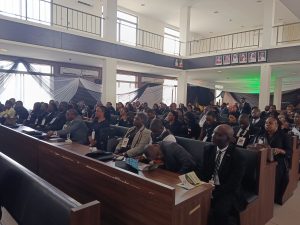
Ojutalayo made the call while delivering the keynote address at the 2026 National Convention of the Magistrates’ Association of Nigeria (MAN), tagged The Gateway Convention, held on Tuesday, October 20, at the Ceremonial Court, Judiciary Complex, Olipakala Village, Kobape Road, Abeokuta, Ogun State.
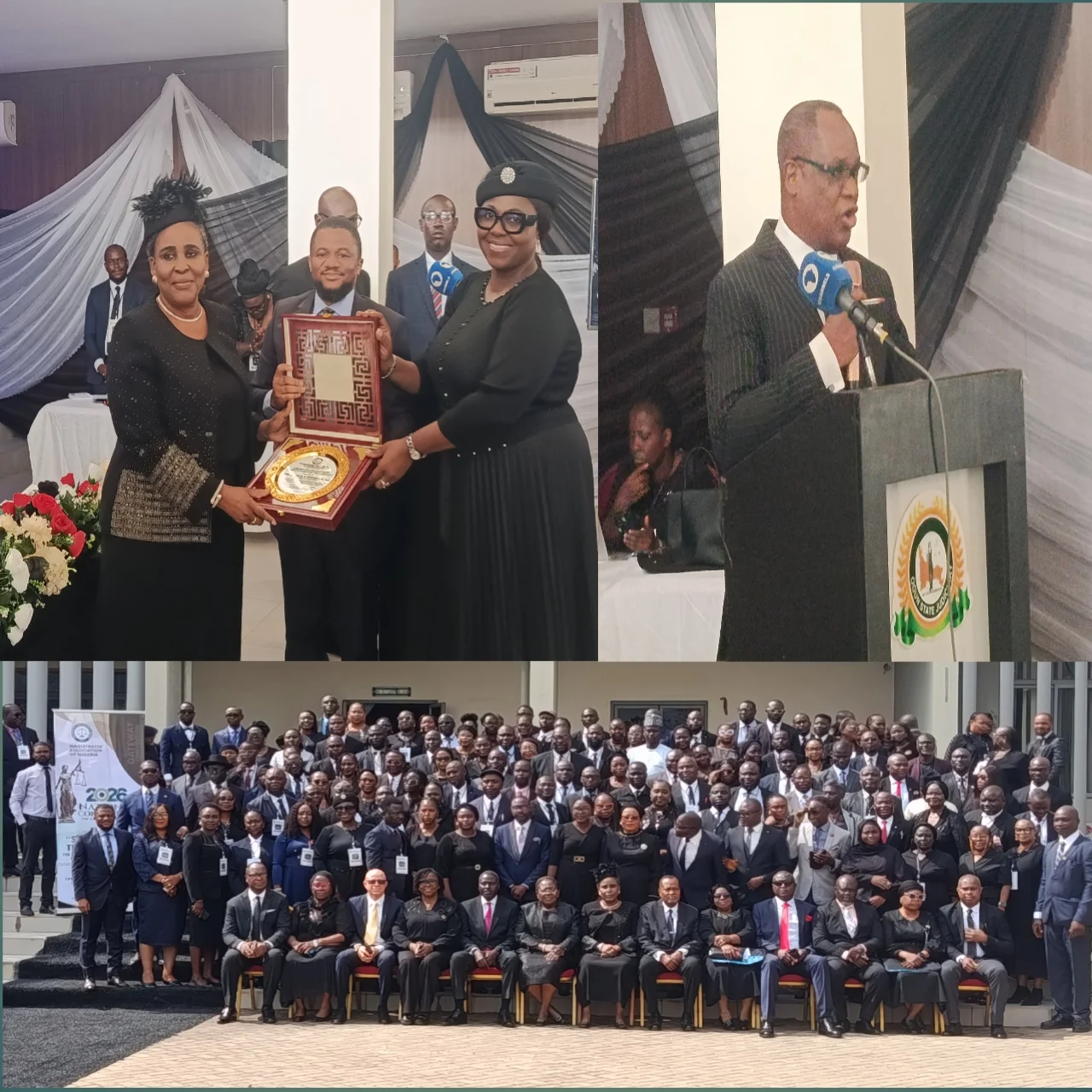
Speaking on the topic, “The Future of the Nigerian Magistracy in an Evolving Justice Sector,” he said magistrates’ courts remained the first point of contact with the justice system for many Nigerians, making their effectiveness critical to the public’s perception of the judiciary.
The convention, held under the theme, “Strengthening the Magistracy for Effective Justice Delivery Through Capacity Building and Innovation,” also marked MAN’s return to a national convention after about 10 years, providing an opportunity to renew the association’s structures and chart a new course for the profession.
Ojutalayo explained that magistrates routinely handle matters involving bail, remand, tenancy disputes, debt recovery and family issues, noting that the fairness, efficiency and timeliness of proceedings at this level directly influence public confidence in the administration of justice.
“For most Nigerians, justice is synonymous with the magistrate’s courtroom,” he said, stressing that the importance of the magistracy should be measured not only by the number of cases handled but also by its ability to protect personal liberty, resolve disputes promptly and make justice accessible to ordinary citizens.
The senior lawyer identified inadequate funding, poor courtroom facilities, delayed welfare provisions, heavy caseloads, outdated record-keeping systems and uncertainty over career advancement as some of the challenges confronting magistrates across the country.
He noted that cramped courtrooms, inadequate equipment and delays in providing official vehicles, accommodation and other welfare entitlements could undermine the efficiency of judicial officers and the quality of proceedings.
Ojutalayo therefore urged state governments and Houses of Assembly to provide identifiable budgetary allocations for magistrates’ courts, covering courtroom maintenance, equipment, transportation and welfare, while ensuring that constitutional provisions on judicial financial autonomy translated into practical improvements at the lower-court level.
“Ensuring the welfare of magistrates is not simply an employment benefit; it is an investment in the independence, effectiveness and integrity of the administration of justice,” he said.
He also advocated clear and objective criteria for the elevation of magistrates to the High Court Bench, arguing that transparent career progression would improve morale, encourage professional development and reduce uncertainty among judicial officers.
According to him, promotion considerations should reflect competence, integrity, experience, the quality of judgments, case-management performance and continuing professional development. He further proposed recognised senior career grades within the magistracy to enable officers who remain on the lower bench to attain professional distinction.
On technology, Ojutalayo called for the gradual expansion of digital recording of proceedings, electronic filing, digital case-management systems and virtual hearings where permitted by law.
He said such measures would reduce dependence on manual records, minimise the loss of case files, improve the monitoring of remand cases and help courts manage heavy caseloads more efficiently.
However, he cautioned that digital reforms must be supported by reliable electricity, internet connectivity, adequate funding and staff training, while safeguarding fair hearing, confidentiality, judicial independence and equal access to justice.
The keynote speaker also drew attention to the high proportion of awaiting-trial inmates in Nigeria’s custodial centres, citing figures attributed to the Nigerian Correctional Service which showed that 51,955 of the 80,812 inmates recorded as of February 9, 2026, were awaiting trial.
The figures represent approximately 64 per cent of the custodial population, highlighting the need for coordinated efforts to address delays across the criminal justice system.
While cautioning against placing the entire responsibility for the situation on magistrates, Ojutalayo said their decisions on bail and remand, as well as their management of cases, made them important to efforts to reduce unnecessary pre-trial detention.
He called for stronger coordination among the police, prosecutors, correctional authorities, legal aid providers and the courts, identifying missing case files, absent prosecutors and the failure to produce defendants for scheduled hearings as factors that frequently frustrate speedy trials.
He also urged legal practitioners to avoid repeated and unjustified requests for adjournments, stressing the need for adequate preparation and compliance with court schedules.
To reduce pressure on conventional courts, Ojutalayo recommended greater use of alternative dispute resolution mechanisms, including court-connected mediation, multi-door courthouses and small-claims procedures for appropriate disputes.
He further called on MAN to take a more active role in justice-sector consultations, particularly those concerning judicial welfare, working conditions, training and institutional development.
Earlier, the Chief Judge of Ogun State, Justice Mosunmola Dipeolu, urged magistrates to prioritise professional competence, continuous learning and efficient service delivery, irrespective of their aspirations for elevation to higher judicial offices.
Dipeolu, who spoke at the opening ceremony, drew from her experience as a former magistrate to remind delegates that their current positions carried significant responsibilities for protecting citizens’ rights and liberties.
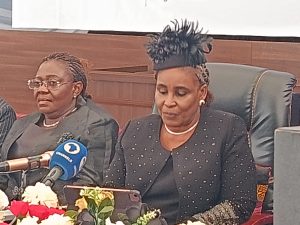
She cautioned against allowing uncertainty over future appointments to weaken commitment to present duties, emphasising that diligent service on the magistrates’ bench remained valuable in its own right.
“A Magistrate who listens patiently, applies the law correctly, manages proceedings fairly and delivers well-reasoned decisions performs a valuable service, irrespective of the judicial office presently occupied,” she said.
The Chief Judge urged magistrates to study decisions of superior courts, keep abreast of legislative developments and strengthen their legal research and judgment-writing skills through regular participation in continuing judicial education.
She also highlighted the growing importance of understanding electronic transactions, cybercrime, online fraud, electronically stored records and the use of artificial intelligence in legal research and document preparation.
According to her, innovation in justice delivery should extend beyond acquiring computers and software to include punctuality, effective case scheduling, proper record-keeping, fewer avoidable adjournments and improved access to justice.
Dipeolu stressed, however, that technological solutions must operate within the law and respect due process, fair hearing, confidentiality, judicial independence and equal access to proceedings.
She encouraged MAN to sustain constructive engagement with relevant authorities on remuneration, retirement provisions, working conditions and professional development, while urging magistrates to reciprocate institutional support with integrity, impartiality and diligence.
The Chief Judge also disclosed that Ogun State had maintained its annual Magistrates’ Conference since its creation in 1976, recording 45 conferences, a tradition she said demonstrated the judiciary’s commitment to continuous professional development.
On the future of the association, Dipeolu described the national convention as an opportunity to revive MAN’s activities after about 10 years of inactivity and strengthen cooperation among magistrates across the federation.
She urged delegates to elect leaders based on integrity, competence and commitment to service, while calling on the incoming National Executive Committee to institutionalise the convention as an annual event.
She further charged state branches to remain active throughout the year, maintain regular communication with the national leadership, organise professional development programmes and meet their financial obligations through prompt payment of membership dues.
Dipeolu said the association’s sustainability depended on the commitment of its constituent branches, transparent financial management and accountability by the national leadership.
“The success of this gathering must be measured not only by the election of new officers, but also by a renewed commitment from every State Branch to remain functional, financially responsible, professionally active and united in purpose,” she said.
In his contribution to the convention, the Chief Registrar of the Ogun State High Court, Mr O. L. Oke, challenged magistrates to complement calls for institutional support with personal responsibility, innovation and professional resilience.
Oke, who discussed the keynote paper, argued that the future of the magistracy should not be measured solely by the opportunities provided by the system but also by the value judicial officers create through the quality of their service.
He urged magistrates to become more effective case managers, embrace authorised technological tools, pursue continuous legal education, treat litigants with dignity and regularly assess their professional performance.
Oke also proposed the establishment of a Magistracy Reform and Data Unit within the association to collect reliable information on court facilities, caseloads, staffing, welfare, digital infrastructure and career progression.
He said the information could support an annual report on the state of the Nigerian magistracy and provide an evidence-based foundation for engagement with judicial authorities and other relevant institutions.
The Chief Registrar further recommended a magistrates’ innovation network to identify and share successful practices in case management and digital record-keeping, alongside a structured reform agenda with measurable targets.
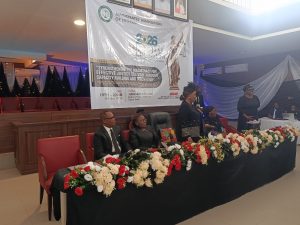
He called for stronger professional cooperation among magistrates, the Bar, court administrators, police, prosecutors and correctional authorities, while urging judicial officers to pursue legitimate remedies for unfair treatment without compromising their independence or integrity.
Oke proposed a 12-month programme for MAN, beginning with an assessment of court conditions and professional needs, followed by a reform memorandum, pilot innovation initiatives, stakeholder engagements and a progress report.
“A Magistrate who listens patiently, applies the law correctly, manages proceedings fairly and delivers well-reasoned decisions performs a valuable service, irrespective of the judicial office presently occupied,” she said.
According to her, innovation in justice delivery should extend beyond acquiring computers and software to include punctuality, effective case scheduling, proper record-keeping, fewer avoidable adjournments and improved access to justice.
In her welcome address, the Chairman of MAN’s National Caretaker Committee, His Worship Onome Nwankwo, described the convention as a defining opportunity to renew the association, restore democratic continuity and strengthen its institutional structures.
Nwankwo said the gathering came 10 years after the association’s last national convention, held in Rivers State in 2016.
She explained that following the dissolution of the former National Executive Committee by the National Executive Council on January 27, 2026, a National Caretaker Committee was constituted to stabilise the association and facilitate the restoration of its democratic structures.
She added that a National Executive Council meeting held in Abuja on April 25, 2026, marked an important step towards reactivating the association’s national leadership processes.
Nwankwo called for unity, transparency, accountability and peaceful elections, urging delegates to elect officers based on competence, integrity, vision and commitment to service.
She also identified continuous capacity building, responsible innovation and improved welfare as key priorities for strengthening the magistracy and improving justice delivery across the country.
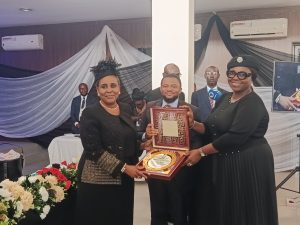
At the event, Justice Dipeolu received a Judicial Excellence Award in recognition of her contributions to the judiciary and the development of the magistracy.
The convention brought together judicial officers and other stakeholders to deliberate on the future of the magistracy, with participants emphasising the need to combine institutional reforms with professional accountability, innovation and sustained capacity building to make justice more accessible, efficient and credible to Nigerians.
