


A Nigerian engineer, artificial intelligence researcher, and Chairman of the Nigerian Society of Engineers (NSE), Abeokuta Branch, Engr. Olumayowa Ayodeji Idowu, FNSE, has presented an innovative artificial intelligence-driven healthcare solution aimed at addressing critical healthcare challenges in Nigeria and other countries. Engr. Idowu was one of the featured speakers at the 3rd UK Engineering Conference, organised by the Nigerian Society of Engineers (NSE), Glasgow Branch, in collaboration with Glasgow Caledonian University, Scotland.
The conference, themed “Engineering Innovation for National Impact,” brought together engineers, academics, researchers, policymakers, and industry leaders from different parts of the world to explore Engineering solutions to contemporary societal challenges. During the conference, the Chairman of the NSE Branch Chairmen Forum delivered a presentation titled “Engineering Scalable Multimodal AI Systems for Clinical Report Generation.”
Speaking at the conference, Engr. Idowu highlighted how Engineering and artificial intelligence can help bridge the gap in healthcare delivery by assisting medical professionals to generate accurate clinical reports more efficiently.
He explained that the proposed solution is particularly relevant to countries like Nigeria, where shortages of medical specialists, increasing patient loads, and limited healthcare infrastructure often result in delayed diagnosis and treatment. According to him, the technology is designed to support healthcare professionals by reducing routine workload, improving documentation, and enabling faster clinical decision-making, especially in underserved and rural communities.
Engr. Idowu emphasised that artificial intelligence should be viewed as a tool to support, rather than replace, medical practitioners.
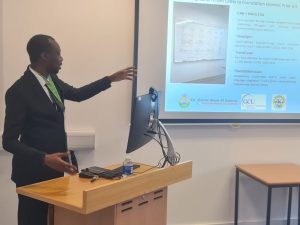
He noted that with appropriate regulation, clinician oversight, data privacy safeguards, and responsible deployment, AI-powered systems can significantly improve access to quality healthcare, strengthen telemedicine services, promote standardised clinical documentation, and contribute to earlier detection of life-threatening diseases.
He further stressed that Engineering innovation must be directed towards solving real societal problems and improving the quality of life of citizens.
His presentation attracted considerable interest from participants and stimulated discussions on the growing role of Engineering in transforming healthcare systems globally. Engr. Idowu’s participation not only showcased the quality of research being undertaken by Nigerian Engineers on the international stage but also demonstrated how home-grown Engineering innovation can contribute to solving pressing national challenges.
His work aligns with the broader aspiration of leveraging science, technology, and engineering to build a more resilient, efficient, and accessible healthcare system for Nigeria.
