

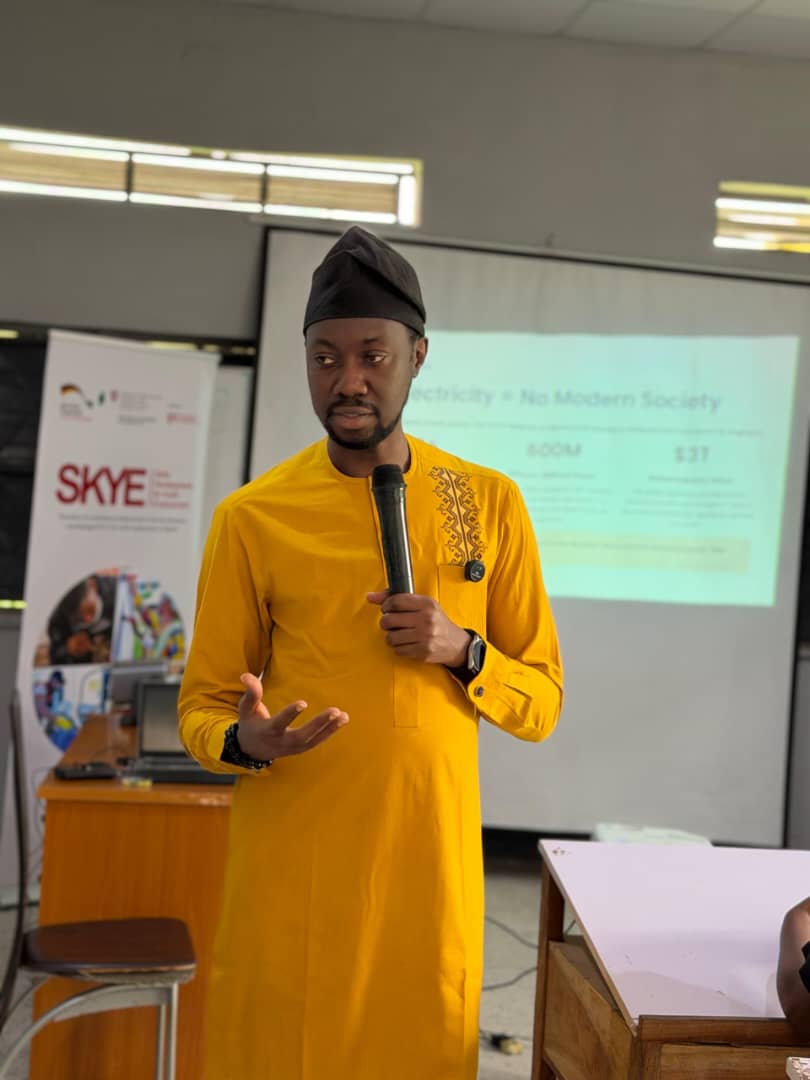
The Chairman of the Nigerian Society of Engineers (NSE) Branch Chairmen Forum and Founder of Engineering of Impact (EOI) Initiatives, Engr. Olumayowa Ayodeji Idowu, FNSE, has charged students of Government Technical Colleges to take full advantage of technical education by developing practical, digital and problem-solving skills that can be deployed to address societal challenges.
Idowu gave the charge while facilitating a session at the STEM Construction Summer Camp (SCSC) 2026 at Government Technical College, Idi-Aba, Abeokuta, where he delivered a presentation titled “Electrical & Electronic Engineering: Powering Our World, Building Our Future.”
The programme was designed to expose students to engineering, construction and technical vocational careers through practical learning and interaction with industry professionals.
Addressing the students, Idowu stressed that technical education provides them with a unique opportunity to go beyond classroom theories and practicalise what they learn through workshops, laboratories, projects and hands-on activities.
He encouraged them to acquire additional skills, learn how to use modern tools and technologies, and develop the confidence to design, build, repair and innovate. According to him, the value of technical knowledge is ultimately demonstrated by the problems it can solve. He therefore challenged the students to identify challenges around them, from electricity and renewable energy to communication, housing, transportation and other community needs, and begin thinking of practical solutions they could develop with their skills.
His presentation demonstrated how electrical and electronic engineering already impacts everyday life through power, telecommunications, healthcare technology and clean-energy systems.
The engineering leader further identified curiosity, creativity, strong STEM knowledge, problem-solving ability, practical competence, digital skills, communication and teamwork as essential attributes for young people seeking to succeed in the modern technological environment.
He encouraged the students to develop hands-on capabilities in areas such as coding, circuit design and engineering software while remaining committed to Mathematics and Physics and continuously asking how existing technologies could be improved. Idowu also drew their attention to emerging opportunities in power engineering, telecommunications, control and automation, electronics, embedded systems, renewable energy and smart infrastructure, stressing that Nigeria’s developmental challenges present enormous opportunities for young engineers and technically skilled people to innovate, create employment and contribute meaningfully to national development.
Idowu commended the STEM Construction Summer Camp for creating an important platform for students to interact with professionals and gain practical exposure to career opportunities in engineering and the built environment.
He called for sustained investment in technical and vocational education, noting that Nigeria’s development requires competent engineers alongside skilled technicians, technologists and artisans who can translate engineering ideas and designs into practical solutions.
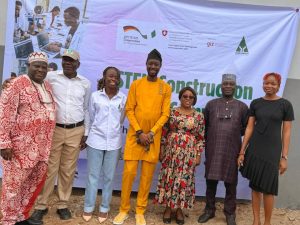
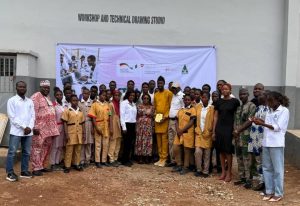
At the end of the interactive engagement, Idowu was appreciated by the participating students, representatives of GIZ, the management of the Kaiser Foundation for Social Development, and officials of the Government Technical College for sharing his experience, professional insights and encouragement with the young participants.
Reiterating his commitment to mentorship and the development of the next generation, Idowu encouraged the students to stay curious, study hard, seek mentors, take advantage of every opportunity to learn new skills and never stop practising what they have learnt. He reminded them that the next engineer, technician or innovator who develops a solution capable of transforming communities could emerge from a Government Technical College, stressing that their present training should be seen as the beginning of a journey towards creating societal impact.
He concluded with his message to the students: “Engineering is not just a career, it is a calling to serve humanity through innovation, integrity, and impact.”
