

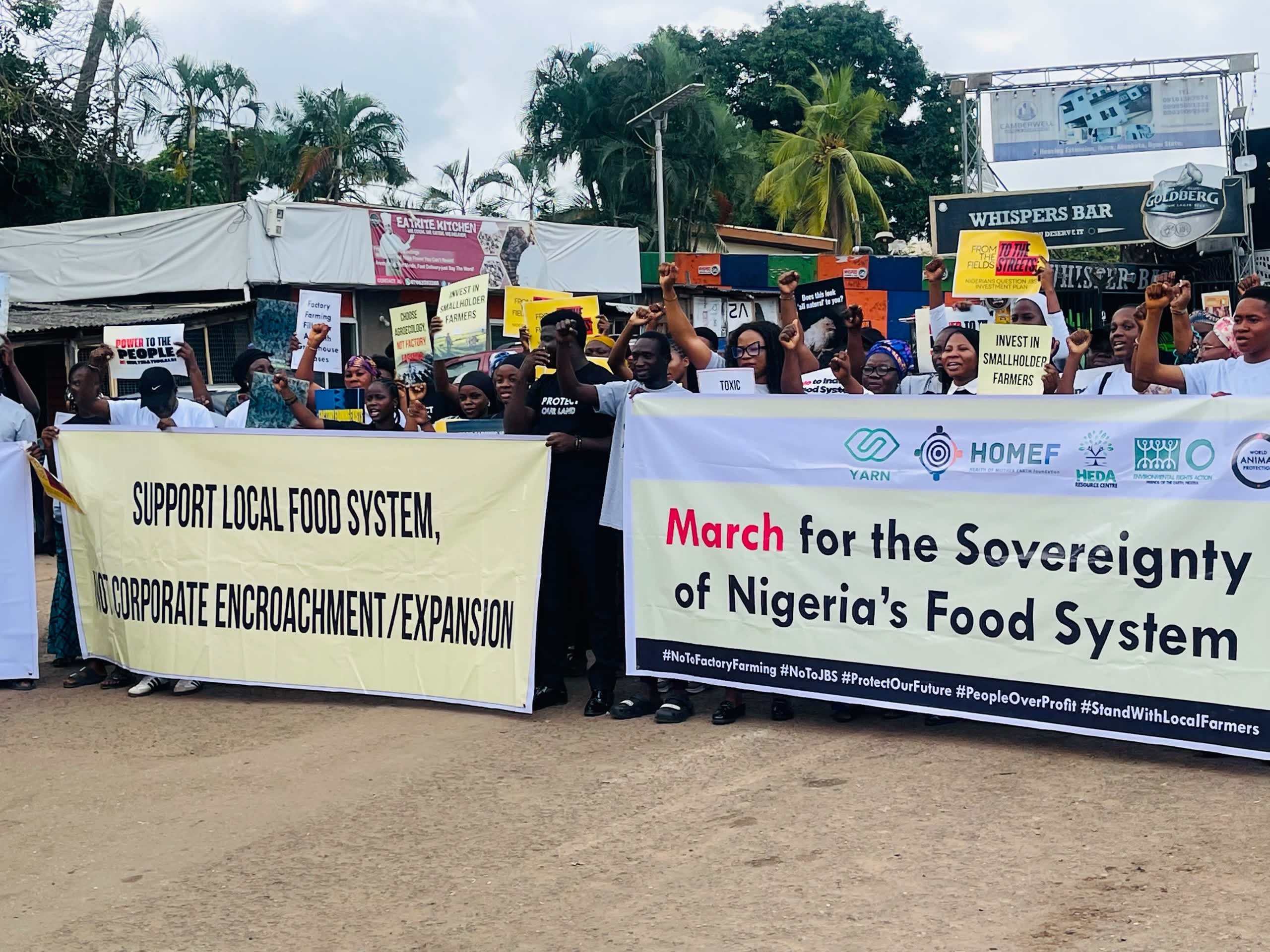
A coalition of civil society organisations, environmental advocates, farmer groups, youth organisations and concerned citizens has called on the Federal Government and participating state governments to suspend further implementation of the proposed $2.5 billion investment by Brazilian meat giant JBS to establish six industrial livestock facilities across Nigeria.
The coalition made the demand on Thursday during a sensitisation rally and press conference held at the Nigeria Union of Journalists (NUJ) Hall in Abeokuta, Ogun State, where it raised concerns about the project’s potential implications for food sovereignty, environmental sustainability, public health, rural livelihoods and land rights.
Speaking at the event, Program Manager of the Youth in Agroecology and Restoration Network, Seyi Olawuyi, said Nigeria was at a critical point in determining the future direction of its food system.
“Nigeria’s food system is at a defining moment. Decisions taken today regarding agriculture and food production will shape the country’s environmental sustainability, public health, rural livelihoods, food security and food sovereignty for generations to come,” Olawuyi said.
He acknowledged the importance of investment in Nigeria’s agricultural sector but insisted that projects capable of fundamentally transforming the country’s food system must be subjected to transparency, scientific scrutiny, accountability and meaningful public participation.
He expressed concern over what it described as the potential risks associated with large-scale industrial livestock production, including pressure on agricultural land, biodiversity, smallholder farmers and local communities. The coalition also cited international controversies involving JBS and other industrial meat companies as reasons for demanding stronger environmental, social and corporate safeguards.
The group further raised questions over reports that Niger State had pledged approximately 1.2 million hectares of land for livestock investment, arguing that such a large allocation could have far-reaching consequences for land governance, community rights and the future of smallholder agriculture.
According to him, another major concern is the reported orientation of a significant proportion of the proposed production towards export markets. It questioned whether such an approach would primarily address Nigeria’s domestic food and nutrition needs or establish a production model that prioritises external markets.
He also criticised what it described as the lack of publicly available evidence showing that comprehensive Environmental and Social Impact Assessments (ESIAs) and meaningful consultations with relevant stakeholders had been completed.
On transparency, he said it had submitted Freedom of Information requests to relevant federal institutions and participating state governments seeking access to the Memorandum of Understanding (MoU), project implementation framework, environmental and social assessments, land allocation arrangements, investment incentives and other documents relating to the proposed investment.
He alleged that the relevant authorities had yet to provide substantive responses to the requests.
He added that the continued non-disclosure of the documents could undermine public confidence and prevent citizens, independent experts and affected communities from properly assessing the project’s potential consequences.
“Transparency is not an obstacle to investment; it is the foundation of responsible governance and sustainable development,” the coalition stated.
Olawuyi insisted that consultation with stakeholders must take place before any further approvals, land allocations or implementation activities are undertaken.
He specifically called for the involvement of civil society organisations, farmer associations, pastoralists, women’s organisations, youth groups, environmental experts, public health professionals, affected communities and other relevant stakeholders.
He said consultation should not be treated as a mere procedural requirement after major decisions have already been made, but should provide stakeholders with timely access to information and a genuine opportunity to influence decisions.
He said the coalition consequently demanded the immediate suspension of further implementation of the proposed JBS project pending the public disclosure and independent review of all relevant documents.
He also called for the publication of the MoU and related agreements, feasibility studies, project implementation frameworks, Environmental and Social Impact Assessments, land allocation agreements, incentive packages and other documents connected to the investment.
He demanded that all outstanding FOI requests concerning the project be answered without further delay and that comprehensive, independent and publicly accessible environmental and social assessments be conducted before implementation proceeds.
The group also urged the government to strengthen safeguards for communities against environmental degradation and human rights violations and ensure that multinational corporations operating in Nigeria meet high standards of environmental and corporate accountability.
The coalition stressed that it was not opposed to agricultural investment or responsible foreign investment in Nigeria.
Rather, it said it supported investments that were transparent, environmentally responsible, socially inclusive and aligned with Nigeria’s long-term development priorities.
“Projects capable of transforming Nigeria’s food system must never be negotiated behind closed doors. They must be informed by sound science, subjected to independent public scrutiny and shaped through inclusive dialogue with the people whose livelihoods, health and environments will be directly affected,” the coalition said.
The group therefore urged the Federal Government to disclose all documents relating to the proposed JBS investment, respond to pending Freedom of Information requests and commence an open and inclusive consultation process before making further commitments.
